How should the EU’s next budget address both crises and long-term needs? What is needed to strengthen Europe’s competitiveness – whilst also making room for sparsely populated regions? And how will security, the Arctic and the green transition shape the future of northern Sweden? These were some of the questions at the heart of the Europaforum Norra Sverige conference in Kiruna.
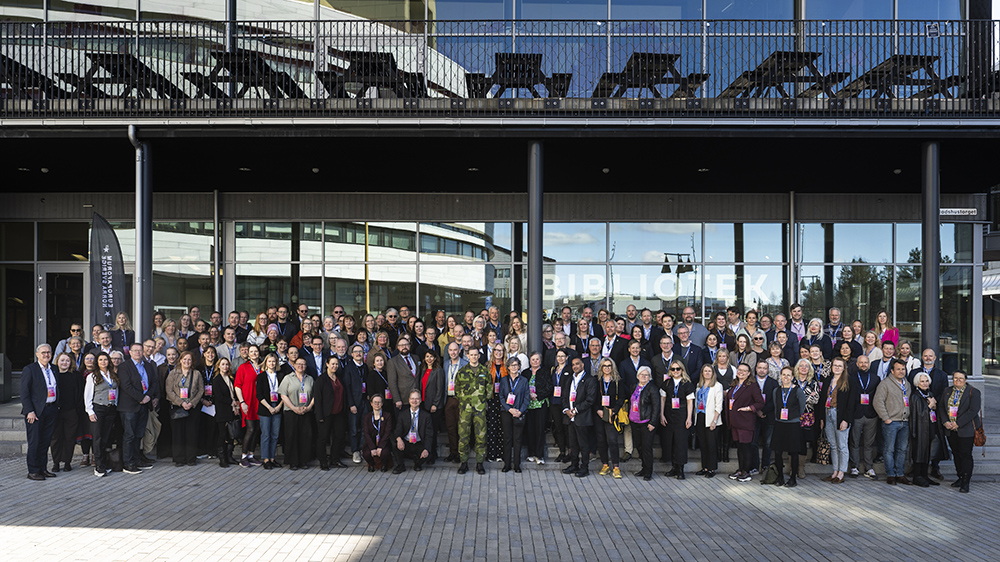
The 30th edition of Europaforum Norra Sverige’s annual forum brought together 185 participants at Aurora Kultur & Kongress in Kiruna on 7–8 May. Over two intensive days, stakeholders from local, regional, national and European levels met to discuss the future of Europe. The significance of the location was a key focus, as northern Sweden is an increasingly important region in the EU’s work on transition, security and competitiveness.
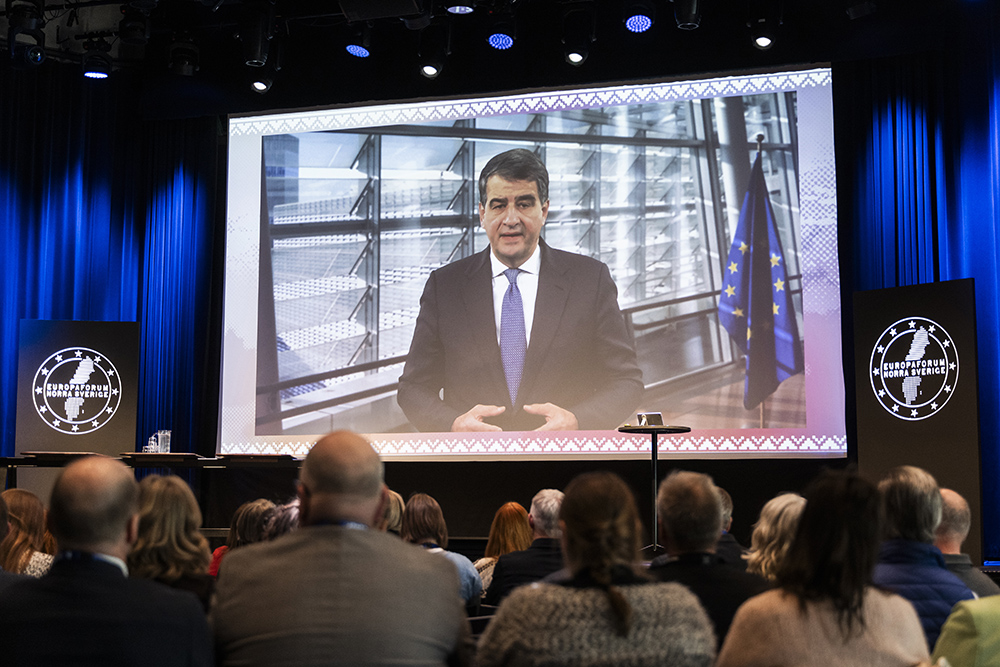
The conference began with a video message from European Commission Vice-President Raffaele Fitto, who highlighted northern Sweden’s importance within the EU.
“You play an important role in many ways, even though the conditions in your regions are not always easy,” he said.
Europaforum Norra Sverige (EFNS) is a political network for the four northernmost counties, of which Region Norrbotten is a member. Within the network, EU issues are analysed and discussed with the aim of strengthening northern Sweden’s perspective in the Union’s policies. The work is based on common positions adopted unanimously across party lines. The annual conference, which was organised this year by Region Norrbotten, is a way of broadening knowledge and discussion on EU issues.
”The world is changing fast”
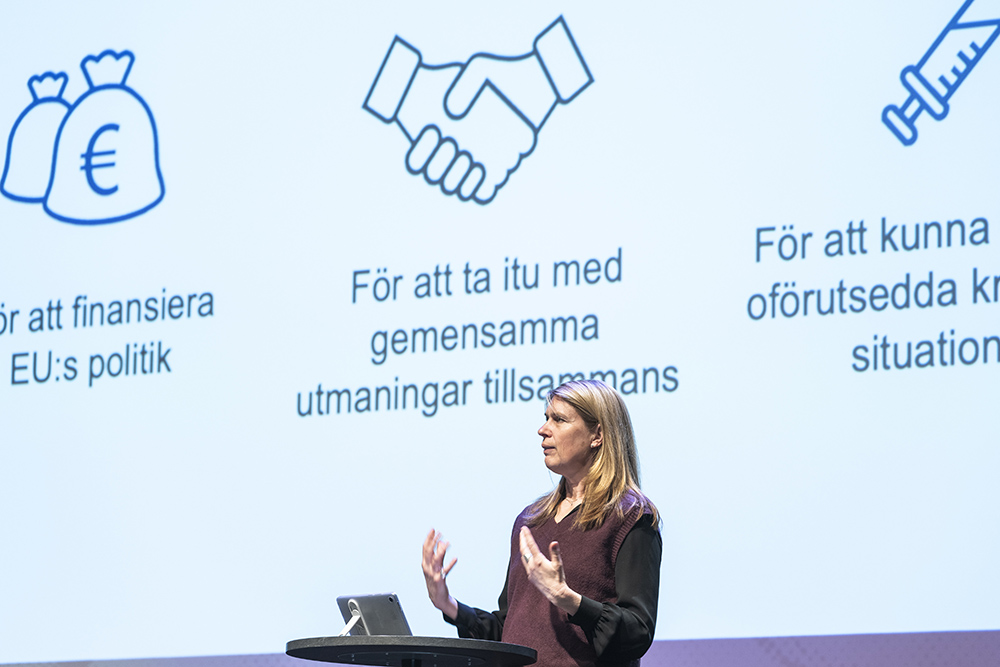
The first seminar focused on the EU’s future long-term budget. Several speakers described a tug-of-war in a time of major change, where resources must be sufficient for both crisis management and long-term development across the Union.
“Flexibility is the guiding principle. The world is changing fast”, said Annika Wäppling Korzinek from the European Commission.
At the same time, the rapporteurs from Europaforum Norra Sverige highlighted the specific conditions in the north – conditions that affect the EU’s ability to achieve its own goals.
“Our geography demands a different approach. Long distances and a small population make it difficult to create functioning markets”, said Carina Sammeli (S), Chair of the Municipal Executive Board in Luleå and rapporteur for EFNS.
Several contributions highlighted the complexity.
“Everyone says we want more, but no one says what should be cut”, noted Teresa Küchler, EU correspondent at Svenska Dagbladet.
“The EU budget is not a zero-sum game – it is about what we build together”.
Concerns about the special sparsely populated areas support
At regional and local level, the opportunities offered by the EU’s industrial policy were emphasised, not least through the proposed Competitiveness Fund. Northern Sweden was highlighted here as a testing ground for the EU’s green industrial policy, where investments in energy, infrastructure and skills provision affect the competitiveness of the whole of Europe.
At the same time, it was emphasised that the transition in the north depends on EU support also reaching sparsely populated regions and smaller players. The specific allocation for sparsely populated areas is not included in the draft budget.
At the same time, security issues were high on the agenda. Military mobility was described as a concrete and growing issue.
“We must be able to move troops and equipment within the EU quickly, safely and without unnecessary complications,” said Annika Wäppling Korzinek.
“We must start to see ourselves as a borderless geography,” said Kerstin Hansdotter from the Swedish Transport Administration.
The Arctic’s importance is growing
The strategic role of the Arctic and northern Sweden was a recurring theme in several agenda items, where international perspectives met local experiences. Within the EU, the Arctic regions are becoming increasingly important in terms of climate policy, geopolitics and economic development.
“First and foremost, it is about the people who live here in the European Arctic,” emphasised Raphaël Goulet from the European Commission.
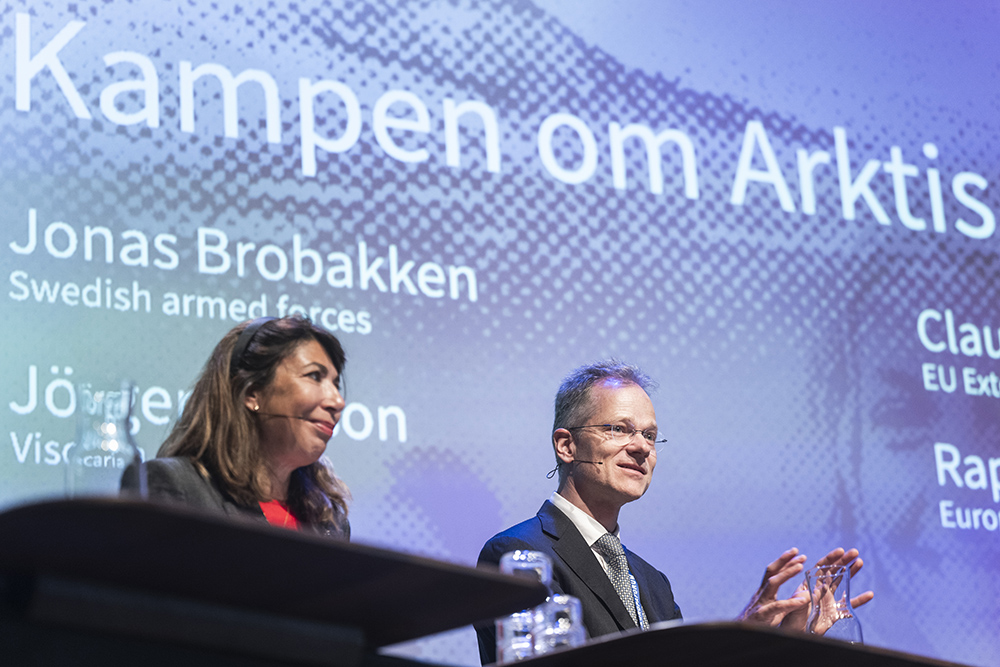
During the session “What will become of Sweden’s EU policy?”, the EU was discussed as a central part of Swedish politics and how decisions in Brussels affect both national development and the regions of northern Sweden.
In a discussion with, among others, Elle Merete Omma from the Sami Council, it became clear how EU decisions directly affect minorities – and how important it is that more perspectives are included early on in the processes. A recurring theme was the need for Sweden to take a more active and proactive role within the EU. The panel felt that Swedish politicians discuss EU issues far too rarely in the national debate and that matters decided at EU level are still often treated as foreign policy.
Is this autumn’s election an EU election?
The discussions also highlighted how closely EU policy is linked to Swedish politics, and that EU issues are, in practice, domestic policy.
“The general election will, of course, also be an EU election”, said Eric Luth from Fores.
Other panellists did not agree that this is the case – from the voters’ perspective.
“Voters vote on values, not on levels of decision-making,” said Veronica Palm.
Rosanna Endre, Arena Idé, pointed to a responsibility on the part of politicians:
“I think politicians are making a mistake by not highlighting the EU as an important issue.”
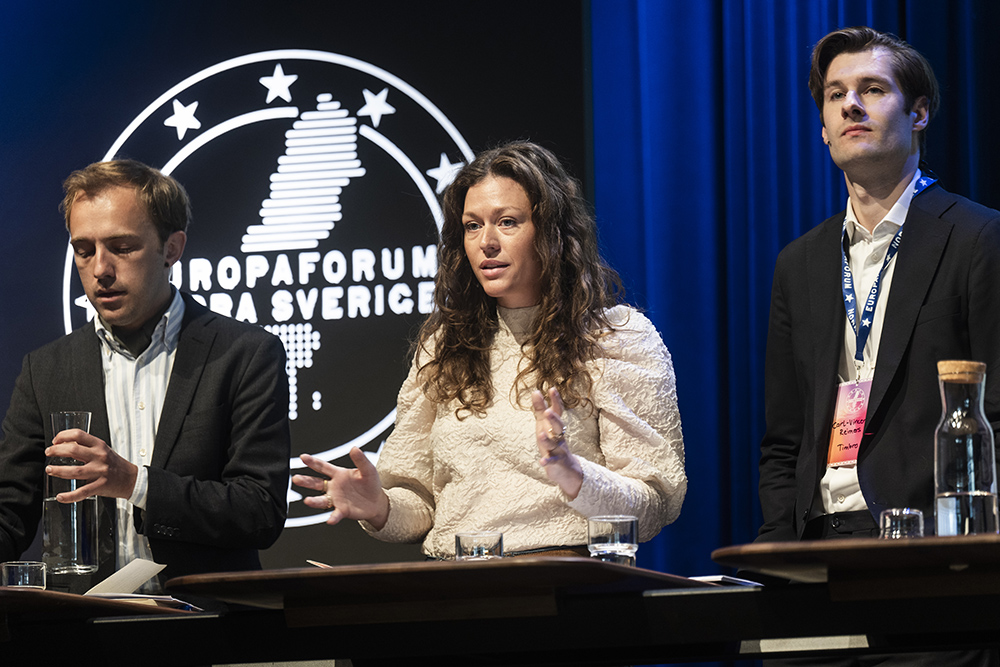
Carl-Vincent Reimers, from the Timbro think tank, described how EU work shapes day-to-day life in government:
“Quite a few ministers are very surprised when they join the government for the first time and realise how much of their working time they will have to spend travelling to Brussels and negotiating”.
Co-creation process
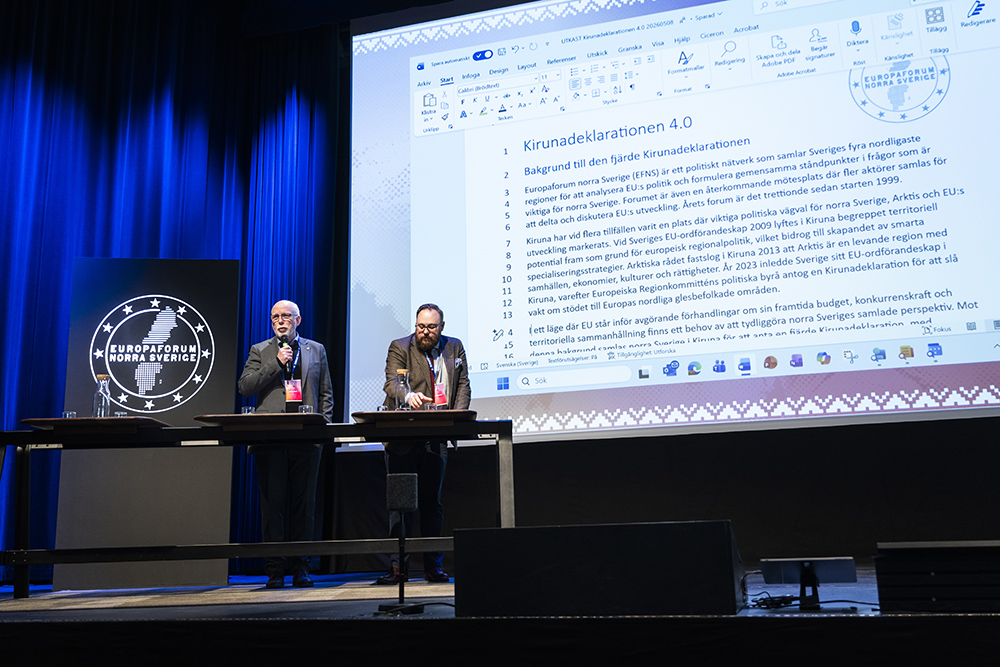
The conference concluded with the adoption of the Kiruna Declaration 4.0, following a co-creation process in which all conference participants had the opportunity to contribute their perspectives, knowledge and proposals.
It will now serve as an important starting point for Europaforum Norra Sverige’s continued work.
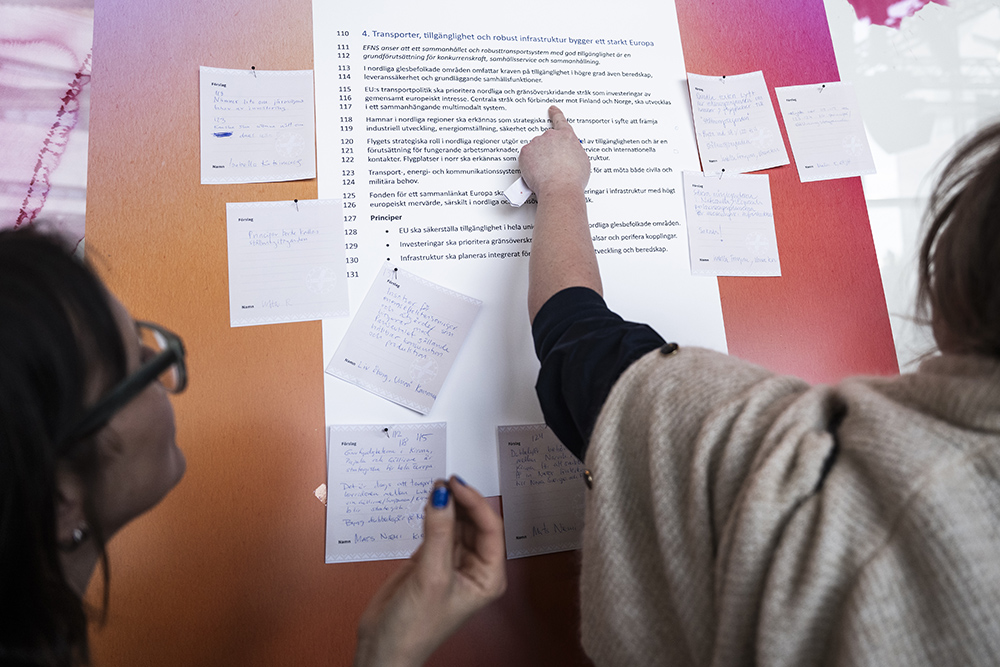
After two days in Kiruna, it is clear that Northern Sweden plays a central role in Europe’s development – as a driving force in the green transition, as a strategic area for security and the Arctic, and as a region where EU policy is put into practice. It is here that responses to many of the challenges of the future are being shaped.
For Europaforum Norra Sverige, and the joint office of the four northernmost counties in Brussels, the work to promote northern Sweden’s interests in the EU continues.
“The declaration is about political priorities. The forum’s participants have had the opportunity to provide input on which issues we should highlight going forward,” said Anders Öberg (S), chair of the regional council in Region Norrbotten and rapporteur for EFNS.
“This commitment is a significant building block in ensuring we have a strong voice in the dialogue, both with the EU and at the national level,” said Jonas Andersson (S), Chair of the Northern Sweden European Forum.
After two days in Kiruna, it is clear that northern Sweden plays a central role in Europe’s development – as a driving force behind the green transition, as a strategic area for security and the Arctic, and as a region where EU policy is put into practice. It is here that solutions to many of the challenges of the future are being shaped.
For Europaforum Norra Sverige, and the joint office of the four northernmost counties in Brussels, the work to promote northern Sweden’s interests in the EU continues.
Story by: Linda Henriksson, Fredrik Kjellman Ölmerud, Julia Bergsten and Sara Stylbäck Vesa
Photos: Simon Eliasson