The EU wants to strengthen protection for rail passengers. It is to become easier to book journeys across national borders and between different transport operators. Europaforum Norra Sverige (EFNS) welcomes this ambition. At the same time, EFNS warns that the rules could have unintended consequences if they are not adapted to the conditions in sparsely populated regions.
Easier booking of connected journeys, clearer information and better support in the event of delays. These are measures that could make the train a more attractive and sustainable travel option for more people. The political network Europaforum Norra Sverige, of which Region Norrbotten is a member, therefore welcomes the European Commission’s proposal.
At the same time, EFNS emphasises that new rules must also work in areas with specific conditions.
– Europaforum Norra Sverige is working to ensure that EU rules work across the whole of Europe, including in regions with long distances and a sparse population, says Erik Lövgren (S), representative of Europaforum Norra Sverige.
Long distances pose particular challenges
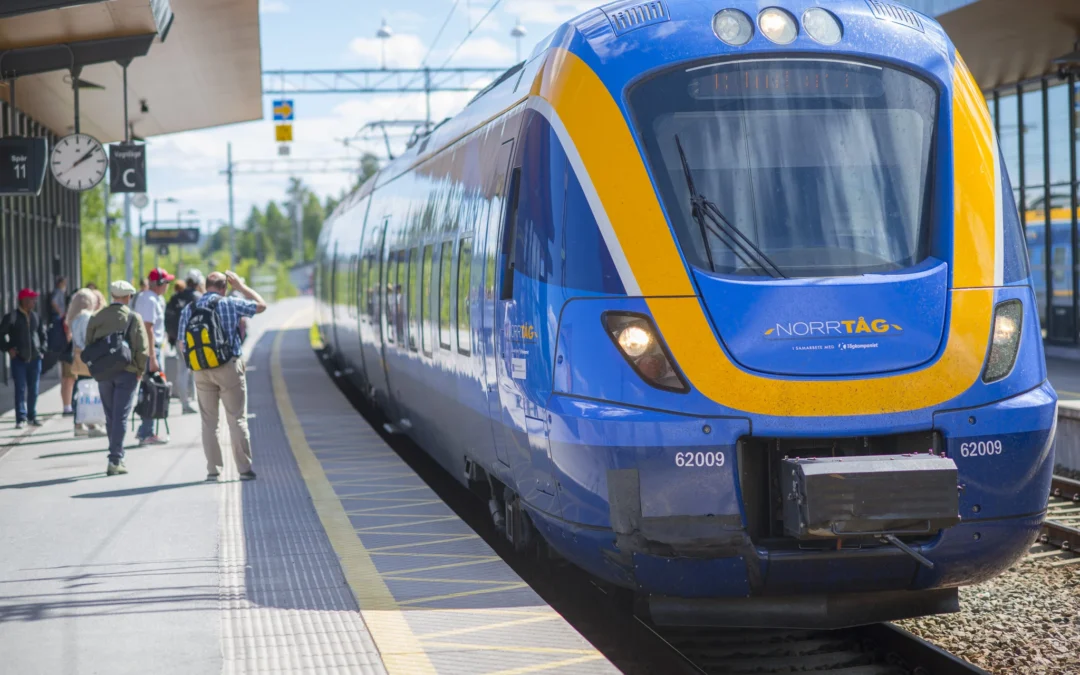
In northern Sweden, the railway is vital for residents, businesses and the tourism sector alike. At the same time, distances are long and services are often less frequent than in densely populated areas. On many routes, there are few departures. There are limited alternatives if a journey is disrupted or a connection is missed.
As a result, the consequences of delays are often more severe than in areas where the next service departs shortly afterwards. Strong passenger protection is therefore important. However, the rules also need to take account of the circumstances prevailing in sparsely populated parts of Europe.
Rights and investment must go hand in hand
Stronger passenger protection alone cannot solve the problems that arise when infrastructure is inadequate or the capacity of the rail network is insufficient. For more people to be able to rely on the train, continued investment in capacity, resilience and reliability is needed.
In northern Sweden, large parts of the rail network consist of single tracks. This makes the system vulnerable to disruptions. Single tracks limit the ability to quickly find alternative solutions when problems arise.
Responsibility must be allocated in a reasonable manner
Europaforum Norra Sverige believes that the rules should be simple for passengers. Anyone affected by a delay should not have to find out which party is responsible. At the same time, the division of responsibility between transport operators, ticket agents, infrastructure managers and other parties must be clear.
– Shortcomings in the infrastructure should not affect individual passengers. Nor should these shortcomings result in regional public transport having to bear the costs of factors beyond its control, says Erik Lövgren.
New requirements may lead to increased costs for rebookings, alternative travel arrangements and customer service. EFNS therefore believes that responsibility and costs should be allocated according to which operator is actually in a position to influence and manage a disruption.
About Europaforum Norra Sverige
How do the EU’s strategies, action programmes, laws and budget affect northern Sweden? Europaforum Norra Sverige is a political network comprising the four northernmost counties in Sweden, where EU issues are analysed and discussed. The aim is to put forward northern Sweden’s perspective and contribute to EU policies that benefit our part of the European Union.
The work of EFNS is based on shared positions. These positions are always adopted based on unanimous decisions by representatives from the various counties, known as rapporteurs. The EFNS network operates across party lines to safeguard the interests of Northern Sweden.